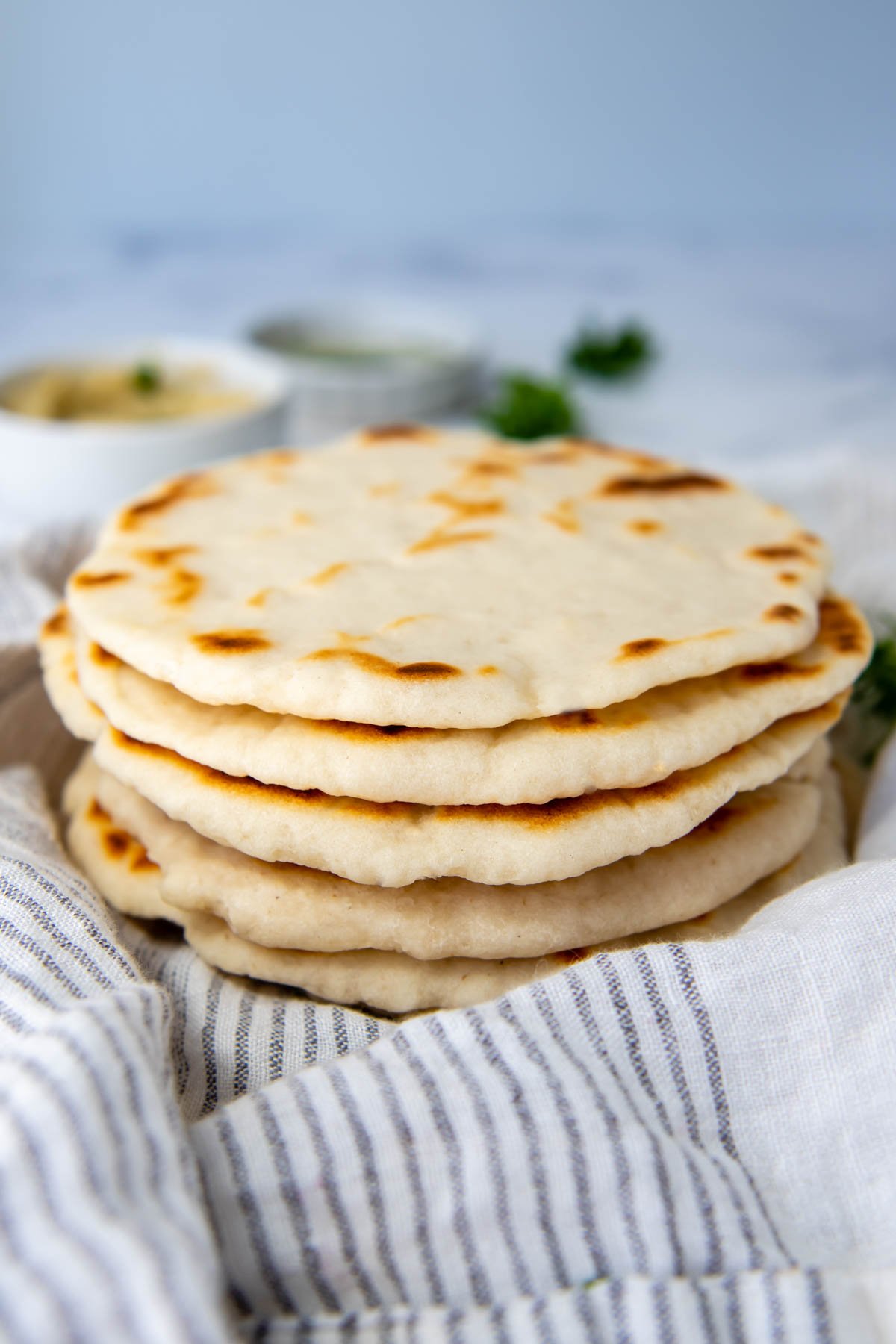
Learn how to make a soft gluten-free flatbread recipe using two simple ingredients to boost the dough’s elasticity, making it easy to shape and roll. Just dump, mix, rise, and cook in minutes on the stove top for a doughy, fluffy texture, fooling anyone it’s both gluten-free and vegan! The possibilities are endless – pita, side for curry, wraps, naan, sandwiches, flatbread pizza, and more!
My Go-To Gluten-Free Flatbread Recipe
Check off another recipe you can enjoy again. Not only does this gluten free flatbread have a soft, pliable texture just as good as I remember, but it’s pretty effortless to whip up with fuss-free prep and a handful of simple ingredients.
What makes this gluten-free version stand out above other recipes? First, using one of my favorite back-pocket ingredients. When making gluten-free breads from my easy, homemade collection I like to add an affordable ingredient, psyllium husk powder to build the dough’s elasticity and absorb excess moisture, which keeps the crumb nice and airy.
Also, I replace a small amount of gluten-free flour with a little potato starch is a trick I use with from-scratch gluten-free rolls to help build structure without adding additional flour, which can dry out the texture.
You are left with soft, pliable flatbread (which works interchangeably for GF naan bread or pita) that even the most novice cook / baker can pull off! This simple one bowl recipe mixes up in minutes, requires one rise, and the dough is very easy to roll out.
Now you can enjoy flatbread pizza again or use to serve with soups, dip in a quick coconut chicken curry, salads, dips, or as a sandwich wrap!
Ingredient Tid Bits
Since this gluten-free pita bread uses no dairy or yogurt, those on a vegan or dairy-free diet can enjoy as well. Below are the recommended ingredients, along with how they affect the recipe and any workable substitutions.
If you would like to add more complex taste, stir in garlic powder or oregano to the mixture. Alternatively, after cooking brush on olive oil, then sprinkle with sea salt, fresh parsley, or parmesan cheese for added flavor.
- Gluten-free flour – I use and recommend Cup4Cup gluten-free flour blend for the softest texture.
- Potato starch (not flour) – Instead of relying on additional flour to structure the dough, I substituted another gluten-free starch for added softness. Use potato starch for best results, but tapioca starch may be substituted. Some readers commented below about swapping in cornstarch.
- Psyllium Husk Powder – An essential gluten-free binding agent ingredient for any dough that requires shaping, such as naan or squishy gluten-free burger buns. It helps help mimic the elasticity and crumb structure of wheat baked goods.
- Active Dry Yeast – Activate the yeast by mixing together with the warm water and a little sugar. If using instant yeast, this step may be omitted and add the yeast with the dry ingredients.
- Baking powder – Helps add rise and loftiness as it cooks on the stove top. I like using a combination of baking powder and yeast to help with lift in GF breads.
Let’s Make This Together!
(Below shows step-by-step photos and modified instructions. For the complete recipe, along with ingredient amounts, scroll down to the recipe card.)
Dump and mix
After the warm water, yeast, and sugar has been whisked and set aside for 5 minutes to activate, you’re ready to mix everything together. In a large bowl combine the dry ingredients.
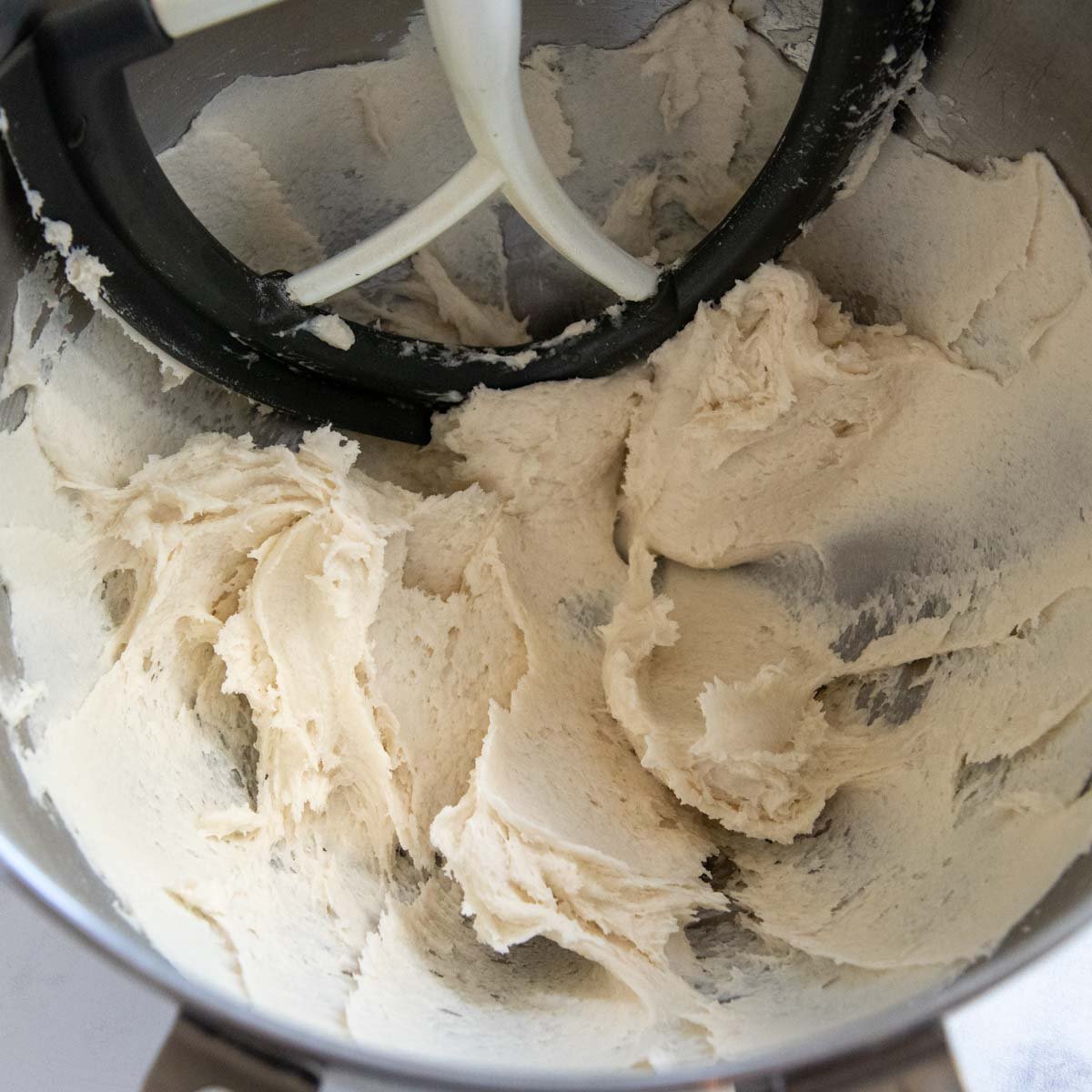
Add in the yeast / water mixture and oil. Mix on medium speed for 3 minutes until you get a stiff, slightly sticky dough. If you do not have a stand mixer, mix with a wooden spoon to combine well.
Time to rise
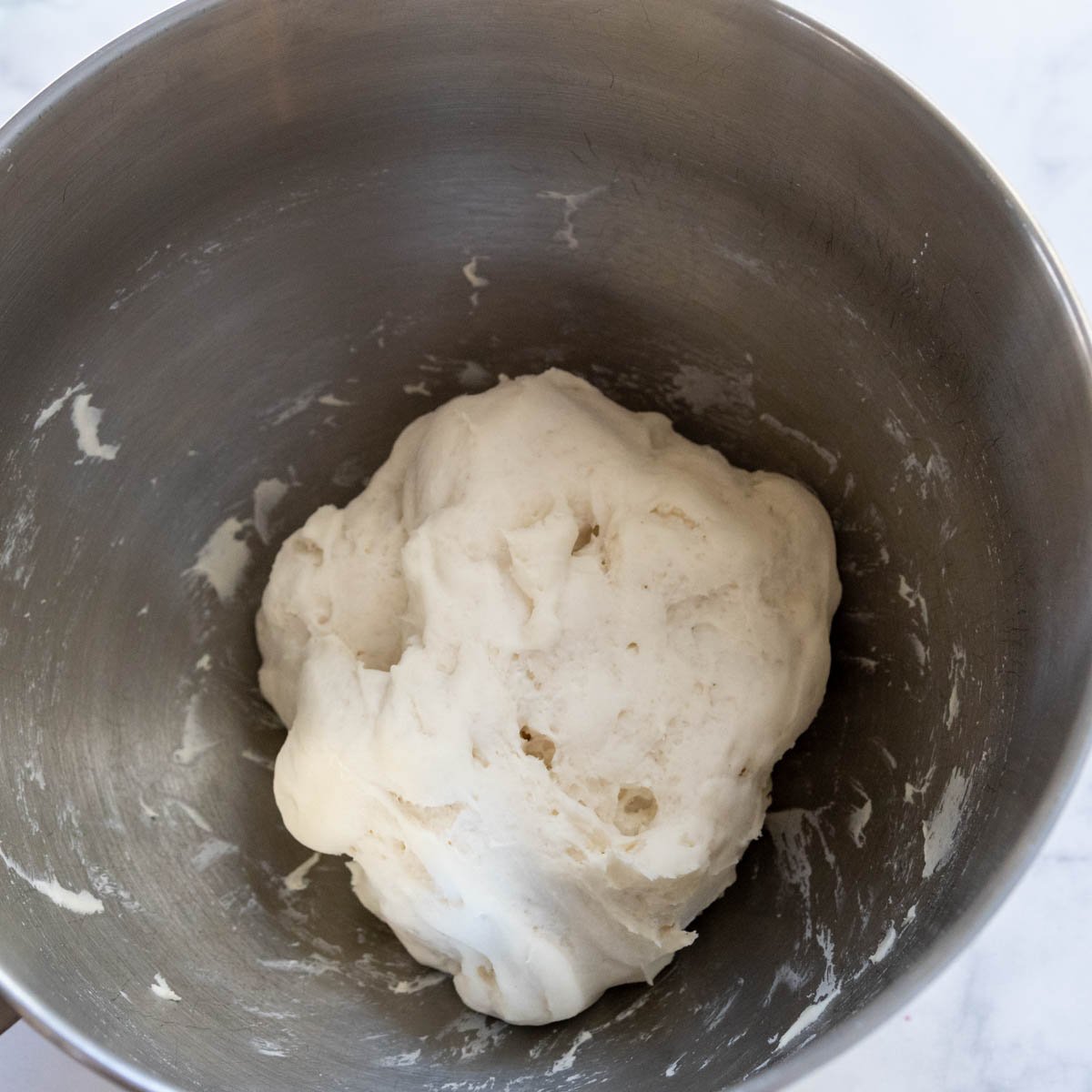
Scrape the dough into the middle of the bowl. (No need to make more dishes for yourself!) Cover and place in the slightly warm oven, leaving the door slightly ajar for 5-10 minutes before closing. Let rise for 45 minutes.
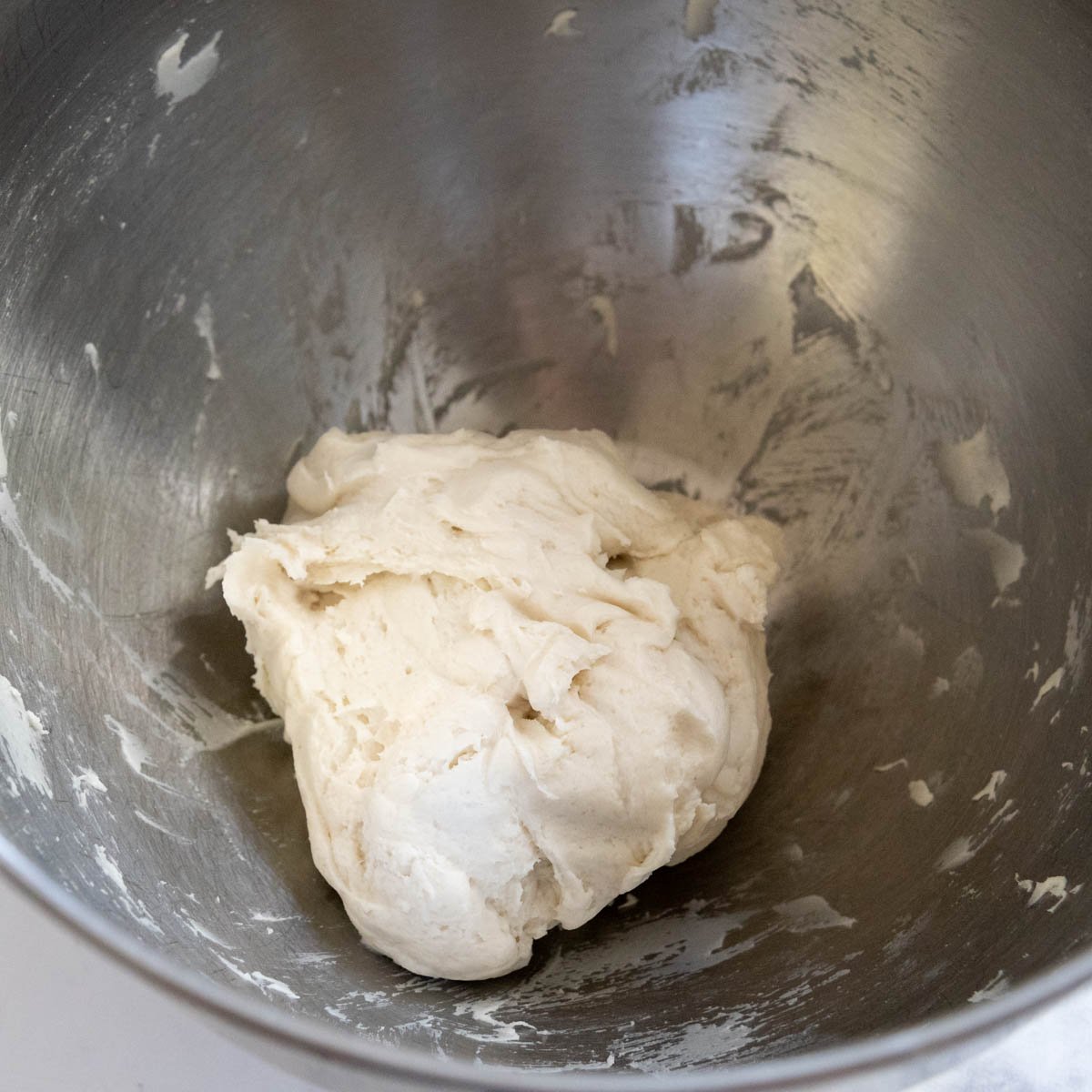
Dough before rising.
Let’s roll and cook
To shape, grease your fingers slightly if the dough sticks. Place a large sheet of parchment paper on a workspace and divide into 5 equal-sized balls. Cover with plastic wrap and let rest for 10 minutes.
Meanwhile, heat a dry nonstick skillet over medium heat.
Move the balls to the side, keeping covered. On the other side spread a very, very light sheen of olive oil. Place one ball in the middle and flatten into a thick disc. Use a rolling pin to shape into a 6½-inch circle.
Transfer the flatbread to the hot skillet. Cook for 1½ – 2 minutes, flip, and cook for an additional 1½ – 2 minutes. Make sure to cook just as long on second side, or they will be dense and not as fluffy (even if they look “done.”) As the flatbread cooks, roll out your next one.
That’s it! Enjoy!
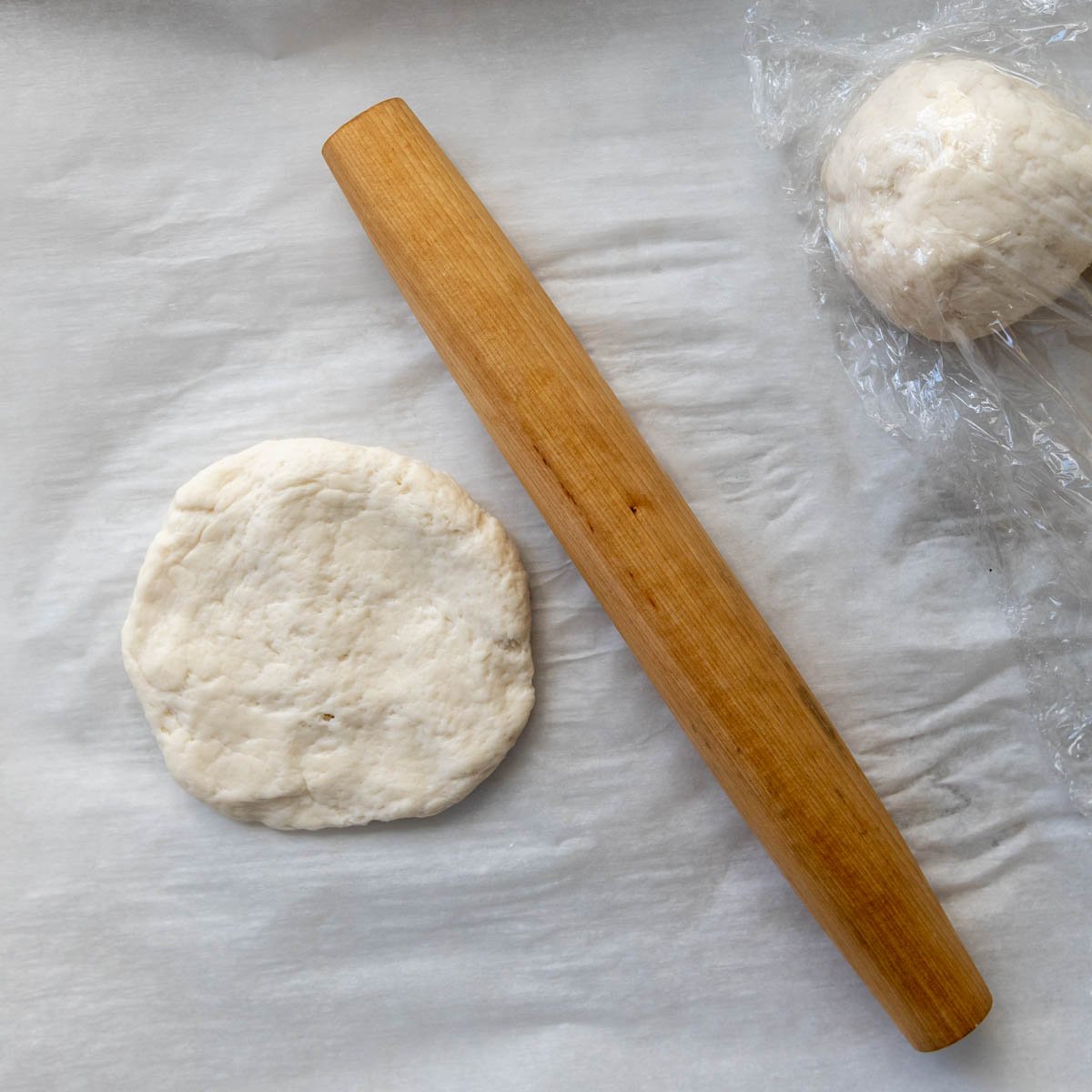
Flatten the ball into a thick disc.
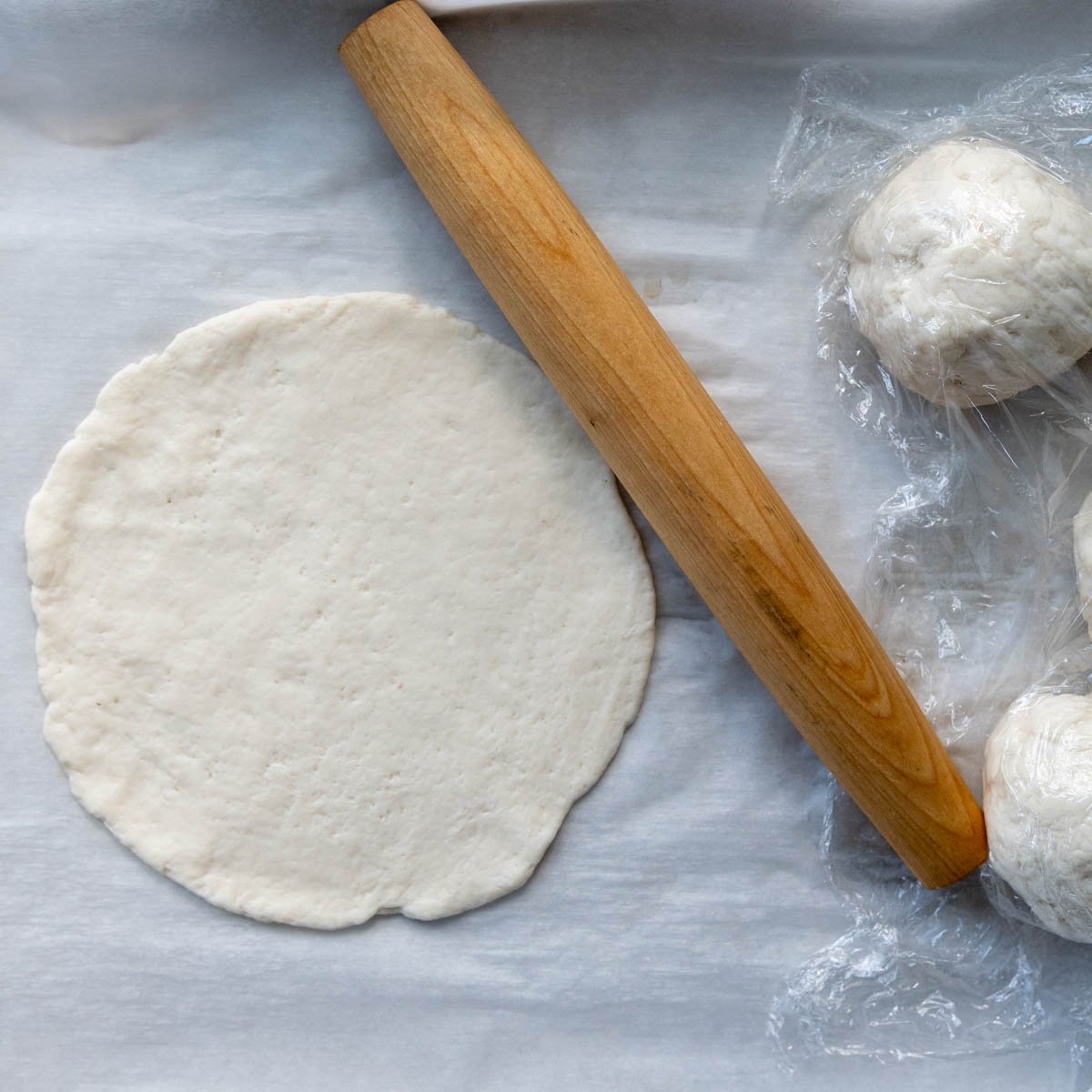
Roll into a 6½-inch circle.